Q&A with David T. Anselmo of Toronto alt-metal band The Divine Project.
Interview with David T. Anselmo of The Divine Project
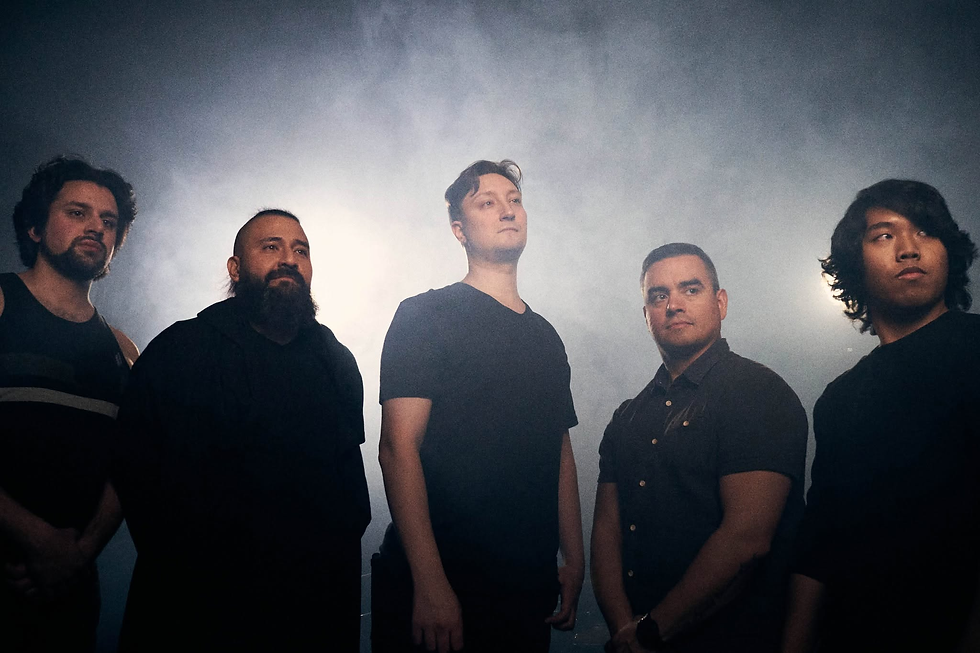
The Divine Project is a modern alt-metal band featuring David T. Anselmo, Eric Divine, Derek "DRock" Boshkov, Ro Stevens, and Mitch Greenham.

Rather than being influenced by a specific style, each person brings their own individual musical influences. Their music draws inspiration from iconic nu-metal Korn and Linkin Park, metalcore bands like Trivium and A Day To Remember, and technical prog-metal groups like Haken and Nospun. The Divine Project blends these influences, but instead of creating a homogeneous mixture, the band accentuates their differences to create a mosaic within each song and weave a tapestry across each EP/LP.
Learn more about their upcoming events, albums, and music on their website: here.
Questions and Answers from David T. Anselmo
In this Q&A, David of The Divine Project discusses the band’s origins, creative process, influences, what fans can expect next, alt-metal music, a debut album officially in the works, upcoming projects, and much more.
Describe your band
The Divine Project started as a high school passion project of Eric Divine. At the time, his old high school band had broken up, so he had resolved to continue writing music under a solo project he called "Divine" because that was his aim: to make music that was grandiose and epic, so that it would only be appropriate to call it Divine.
Who are the members of The Divine Project?
The members of The Divine Project include David T. Anselmo, Eric Divine, Derek "DRock” Boshkov, Ro Stevens, and Mitch Greenham.
What was the spark that got The Divine Project started?
Around mid 2024, after a couple of iterations of recruiting a dedicated lineup for this “divine project," Eric met Ro Stevens on the way to see a concert, and they hit it off immediately. Despite nearly throwing in the towel on the project at the time, Eric sensed the potential to breathe new life into the band, and recruited Ro into the new lineup. Searching online, Eric sent out band member ads and demos until David and Derek returned the call, drinking the TDP Kool-Aid. To finish off the set, David introduced Mitch to the band, and the rest was history.
How would you describe your sound?
Relentless and intense, but versatile. A quick Google search of ourselves called us “Modern Alternative Metal,” which we kinda like, haha.
What is one surprising fact about The Divine Project that fans might not know?
Unlike most modern metal bands, we don’t use backing tracks. We approach songwriting from a perspective that the core vision of the music would always be able to be fully expressed by the 5 of us, rather than relying too much on a laptop.
What artists, experiences, or moments shaped your current style?
Each member draws inspiration from their own favourite subgenres in the metal-sphere, from iconic nu metal acts like Korn or Linkin Park, metal-core bands like Trivium and A Day To Remember, or all the way to technical prog metal sounds like Haken and Nospun.
Our style is like a blend of all our influences, but rather than a homogeneous mixture of them, we aim to accentuate those differences to create a mosaic within each song, and weave a tapestry within each EP/LP.
Is there a piece of gear or technology you can’t live without?
Derek has a bright Neon green bass with pink strings, and it’s become a staple of our stage presence. Same with Eric’s Zakk Wylde signature guitars. Those things are probably considered family heirlooms, with their irreplaceable mojo.
How do you know when a song is finished?
There’s that feeling you get sometimes, after you’ve discovered the song’s identity, that you’ve said all that you can say/that you need to say. That’s when we say a song can be called “finished”. There’s always that temptation to keep experimenting and adding more ideas, but being able to say: “Let’s save these for the next one.” is important. Why waste all your tricks on one song, anyway?
Can you walk us through your musical process as a band?
Our songs usually start with the instrumentals. Eric and David will bring basic song demos and productions to the group, where the band then workshops the structure and the nuances of the riffs and sections until we feel happy with the flow of the song, and Mitch and Derek will then finalize the rhythm section.
After that, Ro and Eric take to the writing room and churn out lyrics and melodies, which will also go through workshopping until the vocal arrangement feels done as well.
Then in the mixing room, David and Mitch will add all the final production bells and whistles that we all discussed in the workshopping sessions.
How much of your personal life makes it into your lyrics?
It’s a big part of our lyricism, our personal lives. Telling stories of the things that move us, with hate or with love, with the music that we feel so strongly is tied to our identities as musicians and people.
How do you handle creative block when it happens?
Set limits. Give yourself rules to work with, like: “only use these notes”, “try to make a riff that uses this technique”, or my personal favourite: “Those tricks you did for the last couple songs and ideas? Don’t do those/Do the exact opposite.” Add as many as you like. Enough rules, and you’ll box yourself into something.
But the smaller a box you put yourself in, the easier it is to think outside it. At some point, an idea or hook takes hold, and you keep developing it until you discover its identity as a song. When that happens, I remove the box and let it run free.
What’s on your current playlist? Any song suggestions for our readers?
Personally, I (David) have recently rediscovered an old favourite: Pierce the Veil’s Collide With The Sky. It’s been on repeat for a while now, along with various J-Rock songs and anime soundtracks. A personal favourite act from those is Band-Maid.
What are some of the best moments of your career?
We held a release show in November 2025 for our debut EP, “Rebirth,” at the Bovine Club in Toronto, an iconic venue with a storied history that has hosted acts like Sum 41, Billy Talent, and Queens of the Stone Age. We sold out that show. It was a great time!
If you could collaborate with any artist, living or dead, who would it be and why?
Getting a vocal feature from Matt Heafy or Mike Shinoda, or a guest solo from Tim Henson or Zakk Wylde, would be insane. Or vice versa, getting to feature on a Trivium or Black Label Society song would also blow our minds.
What were some of the biggest challenges you faced early in your career?
Finding footholds outside of our local area to play. Most of us live in the Greater Toronto area of Ontario, and getting opportunities to play outside of that is difficult to find/organize. Though that is a hurdle, we are well on our way to jumping, with our recent announcement that we’ll be playing a set in the UK in May, as part of The Great Escape festival’s “Alternative Escape.”
What’s something you’ve learned about your own voice or instrument that changed how you write?
As we write more songs, we’ve gotten more used to each other’s influences and playing styles. With each new idea cut, we find ourselves more able to write as individuals yet leave room for cohesion as a unit, to keep to that standard of “musical-mosaic-ness,” which helps set us apart from other bands.
What’s been your most memorable show so far — good or bad?
For David personally: “We played at an all-ages show at a record store's opening day recently, as a guest for the owner, a good friend of ours. After our set, one of the kids in the audience came up to us and told us that we were his favourite act, and that we were gonna go far. Maybe it was just the innocent optimism, but that really put the wind in my sails. Being able to appeal to a younger generation is a step towards inspiring the next generation of musicians, and nothing would be a greater honour than paying forward that creative spark that got all of us started on our musical journey.”
What changes have you noticed in the music industry since the band began?
We came up around the same time AI music started gaining some traction, so it’s been kind of a “tread lightly” situation with how we handle our file transfers and media posts, just to avoid getting scraped by bots and getting our music taken advantage of.
What part of the music business actually takes up most of your time?
Promotion and marketing. Attending video interviews, answering questionnaires, investing in ads, posting on social media, making merch, and developing our website. There’s always a constant tug-of-war between us and anonymity, dragged under the algorithm’s wake.
What’s a stereotype about music or your genre that you’re tired of explaining?
No, we are not angry all the time. We're just passionate about the things we care about, is all.
What advice would you give to emerging musicians?
For those aiming to play music in at least a semi-professional sense, it’s called the music BUSINESS. While developing your musicianship is important, it’s also useful to know how to read contracts, negotiate, and communicate with people. Also, investing in promotion is important. Spending on gear and plugins is all well and good, but skimping on promotion means those investments aren’t getting you a return. Ads on Instagram, Facebook, TikTok, etc., do work.
How do you support other musicians in your community?
We love watching the shows/sets of our peers, and make it a point to try to attend shows of theirs and support them from time to time. We are also working on some more collaborative efforts with them in the future. To make an album full of features from other bands in our scene would be awesome to write.

What does a “good day in the studio” actually look like for you?
As long as we got some sort of progress done. Whether it’s getting a whole track recorded or at least settling on a direction to take an idea, studio time isn’t a waste.
Do you prefer collaborating with others or working solo?
David, Ro and Eric have had experiences making/writing music solo before, and they can all agree that making music with your homies is certainly more fun than working alone.
What kind of legacy do you hope to leave in the music world?
To hear musicians in the future talk about their influences or the reason they picked up an instrument and mention The Divine Project would mean the world to us. If a Hall of Fame of Metal exists, it would be pretty cool to make it there, too.
What upcoming releases, shows, projects, or collaborations should fans look forward to?
A debut album is officially in the works, so keep an eye out for that within the next year.
Final Thoughts from The Divine Project
This is a behind-the-scenes look at Anselmo band. Their answers offer a behind-the-scenes look at the experiences, influences, and creative habits that shape their work.
Learn More About The Divine Project
Follow the socials for The Divine Project. Keep an eye out for their upcoming projects and debut album.


Comments